After the Handshake: The Hidden Fault Lines in Founder-to-PE Transitions

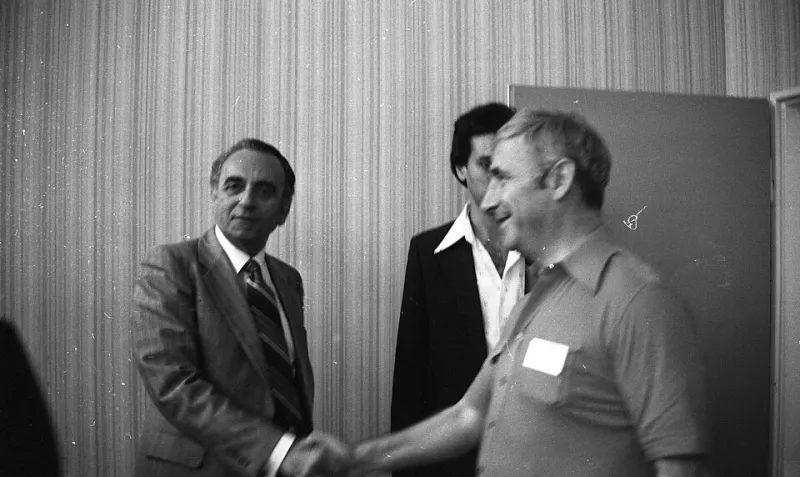
Photo: BOI Infocomms, Public domain, via Wikimedia Commons
For many entrepreneurs, selling a business to a private equity firm represents the culmination of decades of sacrifice. The wire transfer clears, the champagne is uncorked, and the founder — now recast as a retained executive or passive equity holder — prepares for what the deal deck described as a "partnership." What frequently follows, however, is something considerably more complicated.
Across the mid-market, a quiet but persistent pattern is emerging. Founders who transitioned their family-owned or closely held businesses to PE sponsors are increasingly expressing what advisors are calling a new class of seller's remorse — not simply regret over valuation, but a deeper disillusionment rooted in operational loss of control, earn-out disputes, and the psychological weight of watching a company they built get restructured around metrics they never prioritized.
The Earn-Out Trap
Few deal structures generate more post-close litigation than the earn-out. Designed ostensibly to bridge valuation gaps and align incentives, earn-outs have become a recurring flashpoint between founders and their new PE partners.
"We see it constantly," says one M&A attorney who has represented both buyers and sellers in transactions ranging from $30 million to $400 million in enterprise value. "The seller negotiates an earn-out based on EBITDA targets. Then the PE firm makes operational changes — adds overhead, shifts the cost structure, reallocates revenue to other portfolio companies — and suddenly the seller is looking at a payout that's 40 percent of what they modeled. The legal standard for whether that constitutes bad faith is genuinely murky."
The ambiguity is by design, critics argue. PE firms, operating under fiduciary obligations to their LPs, have every incentive to make operational decisions that serve the broader platform even when those decisions compress the acquired founder's earn-out. Founders, many of whom have never navigated institutional ownership before, often discover too late that their legal protections were weaker than their advisors suggested.
A sell-side M&A advisor with a boutique firm that specializes in family business transitions put it plainly: "Founders come to us after the fact and say, 'I thought we were partners.' And I have to explain that from the PE firm's perspective, they were never partners — they were an asset under management."
Operational Clashes and the Culture Chasm
Beyond earn-outs, the operational friction that develops in the first year after close is often severe enough to destabilize the very value creation thesis the PE firm underwrote.
Founders who built businesses through relationship-driven sales, informal decision-making, and long employee tenures frequently find themselves inside a reporting structure that prioritizes KPI dashboards, weekly variance calls, and headcount efficiency ratios. The cultural dissonance is not trivial. In some cases, it directly undermines retention of the people the PE firm was counting on to execute the growth plan.
"We had a situation where the founder had a 25-year relationship with his head of operations," recalled one deal advisor who asked not to be identified by firm. "Within six months of close, the PE firm's operating partner had effectively sidelined that person in favor of someone from their own network. The founder was devastated. He started mentally checking out, and within 18 months he was gone. That's a problem when his relationships were the entire basis of the revenue model."
This phenomenon — what some practitioners are beginning to call "founder flight" — is particularly acute in professional services, specialty distribution, and niche manufacturing, where institutional knowledge and client relationships are concentrated in the seller's personal network rather than embedded in systems.
Structural Remedies and Their Limits
Some deal lawyers and advisors are pushing for more robust contractual protections at the negotiation stage. Enhanced governance rights, clearer earn-out covenants that restrict the buyer's ability to alter the cost structure without consent, and mandatory dispute resolution timelines are among the provisions being proposed with greater frequency.
But structural solutions have limits. "You can write the tightest earn-out language in the world," said one attorney who has litigated several post-close disputes. "But if the fundamental relationship between the founder and the operating partner breaks down in month four, no contract is going to fix that. These are human problems masquerading as legal ones."
Some advisors are recommending that founders engage in more rigorous pre-close diligence on the PE firm itself — reviewing references from management teams at prior portfolio companies, asking pointed questions about operating partner involvement, and negotiating for defined decision-making authority rather than vague "collaborative" language.
For their part, certain PE firms are beginning to recognize that founder retention is a value creation imperative, not merely a relationship nicety. A handful of platforms have begun deploying dedicated integration specialists who work alongside founders in the first 90 days, with the explicit mandate of managing the cultural transition rather than simply installing reporting infrastructure.
The Psychological Dimension
What gets discussed least in the deal community, but may be the most consequential force shaping these outcomes, is the psychological dimension of the transition.
For many founders, the business was not simply a source of income — it was an identity. The decision to sell, regardless of the financial outcome, triggers a grief process that few buyers acknowledge and fewer sellers anticipate. When operational friction compounds that grief, the result is often a founder who is physically present but emotionally disengaged — precisely the opposite of what the investment thesis required.
"I've sat across the table from founders who have made more money than they ever expected to make, and they're still miserable," said one advisor. "Because the thing they actually cared about — the autonomy, the culture they built, the people — that's gone. And no multiple can replace it."
As family office exits to PE continue to represent a significant share of mid-market deal flow, the industry may be approaching an inflection point. If seller's remorse becomes sufficiently widespread and visible, it risks chilling future deal activity — particularly in markets where founders talk to one another. The structural and cultural work required to close that gap is not glamorous, but for PE firms competing on reputation as much as capital, it may be among the most important work on the table.