When the Lender Becomes the Bidder: Private Credit's Quiet Claim on Mid-Market Deal Flow
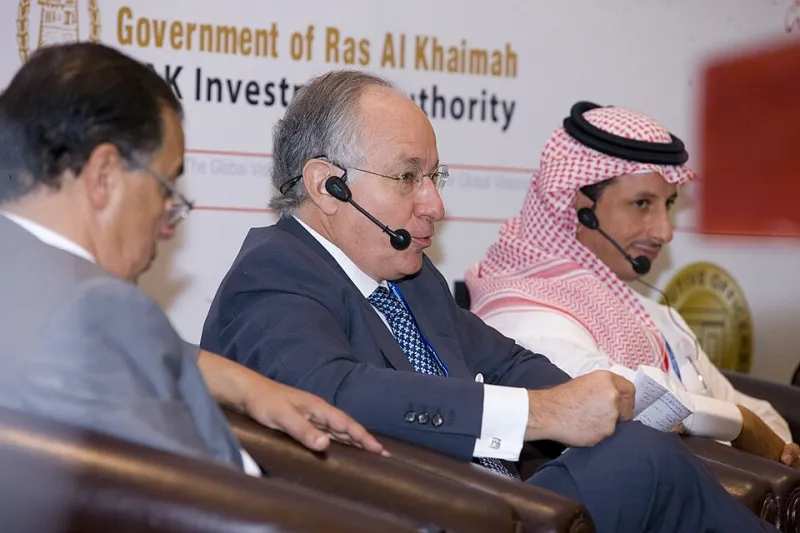
Photo: Richter Frank-Jurgen, CC BY-SA 2.0, via Wikimedia Commons
Private credit's ascent has been told, for most of the past decade, as a story about financing. Direct lenders absorbed the leverage that banks declined to provide, priced it at a comfortable spread, and handed the proceeds to sponsors who put it to work on acquisitions. That story has quietly changed. In a growing number of mid-market situations, the lender is no longer the counterparty to the deal. It is the buyer.
The consequences for private equity's deal engine are only beginning to be understood by the broader market, but practitioners closest to the middle of the middle market have been living with them for several quarters. What was once a complementary relationship — sponsor originates, lender finances — is now, in selected segments, a competitive one.
From Financing the Deal to Being the Deal
The mechanics are straightforward. A private credit manager with permanent capital, a large and growing base of committed LP money, and a mandate to deploy can originate an acquisition directly. It keeps the asset on its own balance sheet, earns the coupon and the equity upside, and avoids paying a sponsor a management fee for the privilege of sitting in the same capital structure.
Industry data providers have chronicled the growth of the asset class for years, but the more telling indicator is behavioral. Credit managers are building origination teams staffed by people who learned deal-making at sponsors. They are cultivating relationships with family-owned businesses, independent sponsors, and founder-operators who might once have been handed to a buyout firm. Several have assembled in-house operating resources and value-creation groups that look, structurally, like a small PE firm's.
"Two years ago we would have called a credit fund about a unitranche," said a partner at a lower-middle-market sponsor based in the Midwest. "Now half of our conversations with them begin with a question about whether they would rather own it."
Where the Squeeze Bites: The Middle of the Middle Market
The crowding is not uniform. Large-cap buyouts remain, for the most part, a sponsor game — the check sizes and the complexity of operational transformation still favor a firm with a control mandate and a bench of operating partners. At the top of the market, private credit generally remains a financing solution.
The pressure is concentrated in the $10 million to $75 million EBITDA band, where deals are large enough to interest an institutional credit manager and small enough that a direct lender's balance sheet can absorb the asset without syndication. In that range, a sponsor competing for a founder-owned industrial distributor or a regional healthcare services platform may find itself bidding against a lender that can close faster, take less structural risk, and offer the seller a cleaner story about continuity.
Independent sponsors — who operate without committed fund capital and often rely on a lender's confidence in the thesis — report the most acute friction. Several note that lenders have become more willing to step in as principal when a sponsor's financing package is deemed too aggressive or its equity commitment too thin.
Pricing, Terms, and the Vanishing Auction
The second-order effects land on deal economics. When a lender can credibly choose between financing and owning, the financing it does provide is priced differently. Sponsors describe narrower flex, less appetite for delayed-draw structures, and more insistence on covenant protections that would have been negotiable in a more sponsor-friendly market.
More subtly, the presence of a competing buyer thins auctions. Sellers advised by bankers who understand the landscape increasingly run dual-track processes that include credit buyers alongside sponsors, and the result is fewer final-round sponsor bids and less information leakage between them. For a mid-market GP that depends on three or four completed transactions a year to sustain fundraising momentum, losing a bid to a lender it has financed deals with for a decade carries a particular sting.
Three Choices for GPs
The response among sponsors has clustered into three broad strategies.
The first is partnership: formal forward-flow arrangements and co-lending programs in which the sponsor retains origination and control while the credit manager takes a larger share of the economics than a traditional lender would. These structures preserve the relationship but dilute the return profile.
The second is co-ownership. Some GPs now bring a credit manager in as a minority equity partner at the point of acquisition, converting a potential rival into a co-investor and securing financing on preferential terms. The trade-off is governance complexity and a share of upside that would once have belonged to the fund.
The third is movement upstream. Firms with the scale to do so are concentrating on larger transactions, add-on platforms, and sector consolidation plays where a control premium is harder for a balance-sheet buyer to match. This is a rational retreat, but it leaves the lower middle market — historically the training ground for the next generation of PE partnerships — increasingly contested territory.
What It Means for Control
The deeper question is philosophical. Private equity's value proposition rests on control: the ability to replace management, restructure operations, and force decisions that a passive owner would defer. A credit manager holding an asset on its own book has different incentives. Its return is driven primarily by yield and by avoiding impairment; operational intervention is a defensive tool rather than a source of return.
That may be an acceptable trade for a founder seeking certainty, and it may suit a lender with patient capital. Whether it produces better outcomes for the businesses in question is a question the next credit cycle will answer. For sponsors, the more immediate task is clear: the pipeline is no longer contested only by other sponsors, and deal sourcing strategy has to account for it.